Experience
In Je Bolwith De Voorhoede
Astro, TypeScript, WebComponents, DatoCMS, GraphQL
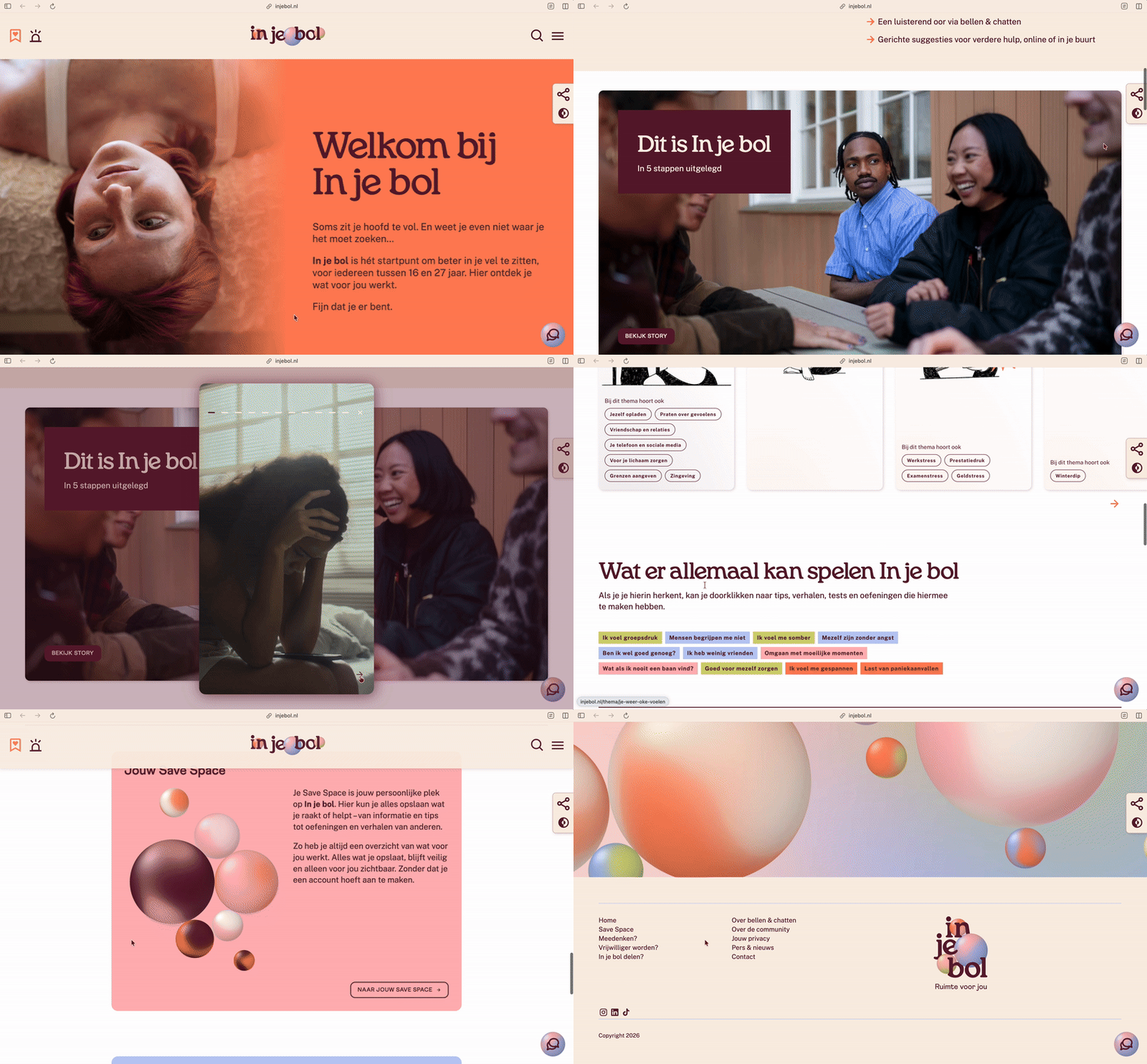
Contributed to the core development of In Je Bol (an initiative by De Kindertelefoon among others) during my time at De Voorhoede, collaborating closely with developers, designers, and stakeholders to bring the platform to life.
Click here to view the projectOverview
In Je Bol is a digital mental health platform for young people aged 16–27, offering accessible information, self-help tools, personal stories, and anonymous support options. The goal is to lower the barrier to talking about mental wellbeing and seeking help while allowing them to retain their right to privacy.
Project snapshot
- My role: Front-end developer (Internship)
- Team: Multidisciplinary team (developers, designers from Multitude, stakeholders)
- Type: Client project
- Stack: Astro, TypeScript, WebComponents, DatoCMS, GraphQL
The challenge
The main challenge was building a privacy-first, content-heavy platform around sensitive subject matter while keeping the experience approachable, fast, and easy to navigate. Editors needed a high degree of freedom to manage and update content independently, while the frontend had to remain performant, accessible, and consistent across devices. Balancing editorial flexibility with a structured, maintainable frontend architecture was a key concern throughout the project.
The solution
We used Astro as the foundation to deliver strong performance with minimal JavaScript. Content was managed via DatoCMS and fetched using GraphQL, keeping the frontend decoupled from content management while supporting a flexible editorial workflow. The interface was built using reusable, CMS-driven components that could adapt to different content types and layouts. This way, we allowed the platform to scale while maintaining clarity, accessibility, and performance. We also made it a point not to use any kind of tracking to maintain the privacy of these youths.
My contributions
- Built reusable frontend components based on Figma designs
- Integrated GraphQL queries to fetch and render CMS content
- Worked on responsive layouts and cross-device consistency
- Helped ensure accessibility and performance best practices
- Collaborated closely with designers and developers
- Contributed to building the self-help quiz environment and displaying its results, with technologies like WebComponents
Challenges & learnings
Working on this project showed how strongly content structure and CMS modeling influence frontend architecture. I learned to design components with reusability and flexibility in mind, especially when dealing with dynamic, editor-driven layouts. Technical considerations aside, being able to work on a platform focused on mental health reinforced the importance of accessibility, clarity, and tone in frontend development. These are very sensitive grounds, after all.
Outcome
The platform was successfully launched as a live product. Editors wereable to independently manage and update content through the CMS, while the frontend remained performant, maintainable, and accessible for its target audience. Thankfully, many youths now consider this place a safe space.